


The first time I used ChatGPT’s camera, I had two thoughts at once.
The first was: wow this is so good.
The second was: I can’t believe they shipped this.
Instead of opening the familiar full-screen iPhone camera, ChatGPT keeps you inside the conversation. You take a photo, it collapses into the composer, and you keep going. It feels like one continuous action.
But ChatGPT isn’t a small app quietly testing design concepts. More than 900 million people use it every week. The familiar camera also carries years of solved problems: zoom, flash, grid lines, accessibility, and muscle memory. Build your own and they become your problems. Zoom is your bug now. Flash is your bug now.
I couldn’t stop thinking about the tradeoff. Was this innovative or reckless?
When should you reinvent an interface people already know?
Everything the default was doing
Here is a quick video of what the default iPhone camera looks like. It should feel pretty familiar to everyone:
And then here is the new version I built based on the ChatGPT camera:
I built my own version for Amy. Somewhere between the first prototype and the finished version, I started arguing with myself a bit.
What happens in a dark restaurant when someone needs flash? What if they want to zoom or rely on grid lines? Was I simplifying the task, or removing useful controls because the result looked better in a demo?
Familiar interfaces are easy to underestimate. They look generic because we no longer see the decisions inside them. The default camera isn’t just a collection of buttons. It’s compressed history: edge cases, platform conventions, accessibility work, and learned behavior.
Use the default and you inherit that work for free. Replace it and you inherit the responsibility.
That doesn’t mean familiar interfaces should never change. ChatGPT made a convincing case that the default can be designed for a much broader job than the one in front of you. But reinvention has a cost: you can make one path feel unusually coherent while reopening problems the old version already solved.
Who ships something like this?
I got curious about the team that would ship a change this bold. I went looking for a postmortem and never found one. What I found instead was better: the people who built it were talking about it in public.
A few days after launch, OpenAI design engineer Naman Kedia posted the flow. He described the attach menu, camera, and final attachment as “one continuous action.” That was exactly what had caught my attention.

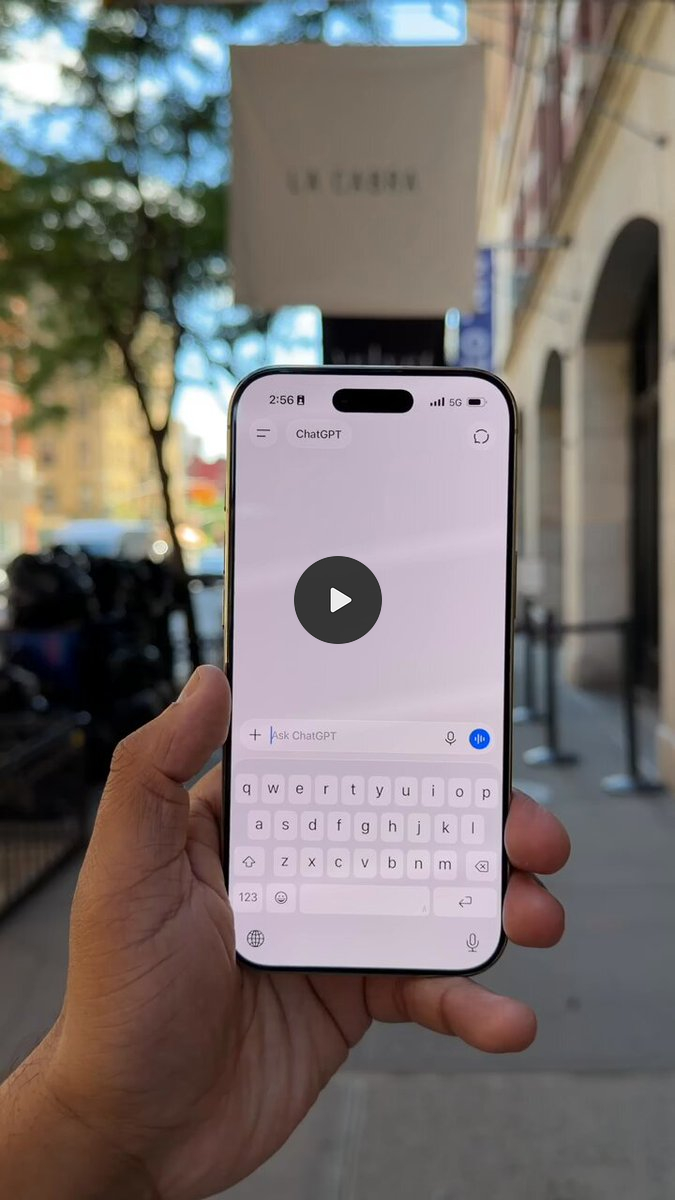
He asked for feedback too. When someone flagged unreliable autofocus and no tap-to-focus, he said it was fixed and would roll out that week. That doesn’t tell me what happened before launch. But it does tell me they weren’t hiding from what was missing.
At an older company, I can imagine this becoming 10,000 meetings. One about flash. One about zoom. One about accessibility. Some would be about real problems. And somewhere in the middle of them all, the idea just dies.
I keep going back and forth on whether shipping first is brave or reckless. Part of me finds it incredibly inspiring that they just shipped it and listened. Part of me wonders how many solved camera problems they just made their own again.
The closest thing I found to an answer was an interview with Ian Silber, OpenAI’s head of product design. He said a lot of their work starts as a prototype the team can actually use inside the product. Then they iterate, see how it fits with everything else, and decide whether it should ship to everyone.
He wasn’t just arguing for speed, either. Rushing one thing out without seeing how related work could fit together is, in his words, “bad systems thinking.” He never mentioned this camera, and I don’t know if it followed that process. But his description made more sense to me than a simple “move fast” lesson. Get a real version in your hands. Use it. See how it fits. Then decide if it belongs. That was easy to admire when it was someone else’s product. It got harder when it was mine.
Then I had to make the decision myself
Admiring ChatGPT’s camera didn’t make it right for Amy. The question that helped me decide wasn’t really about cameras: What is the person trying to make?
On Instagram, the photo is the final product. I might adjust the framing, use grid lines, change the zoom, or take several versions. How it looks matters. That’s not what’s happening in Amy.
In Amy, I just want a calorie estimate. I’m not trying to take a beautiful photo, and I probably won’t edit, share, or look at it again. The photo isn’t the product. It’s disposable input. The camera is closer to a scanner than a creative tool.
Once I saw it that way, the tradeoff got clearer. I wasn’t removing controls from someone composing a photograph. I was removing decisions from a quick scan. The default camera supports every kind of photography. Amy’s only needs to help someone point at food, take a usable photo, and move on. So I kept the custom version.
I kept the camera. I kept the doubt.
Familiarity is a feature. A custom interface needs a better reason than simply feeling more distinctive.
In Amy, the narrower camera earns its place because the job is narrow. It keeps the interaction in context and removes controls that rarely matter for this photo. If people need flash more than I expected, or use food photos in ways I didn’t anticipate, I’ll revisit it. A clean interaction isn’t useful if it stays clean by ignoring what people need.
That’s what I find most interesting about OpenAI’s decision. They didn’t discover the universally correct camera. They treated a familiar interface as something that could still be questioned. Older companies can confuse deliberation with care. Faster ones can confuse motion with courage. I’m not sure either failure mode is better.
The rule I’m trying to use now: before reinventing an interface, understand what the default quietly does for you. Be specific about the narrower job your version serves. Know which problems you’re willing to reintroduce. Stay humble enough to put something back when the evidence changes.
The goal isn’t to make everything custom. It’s to know when the familiar interface was built for a different job. That’s much harder than making a new one.
We’ll see if i keep this camera in Amy.